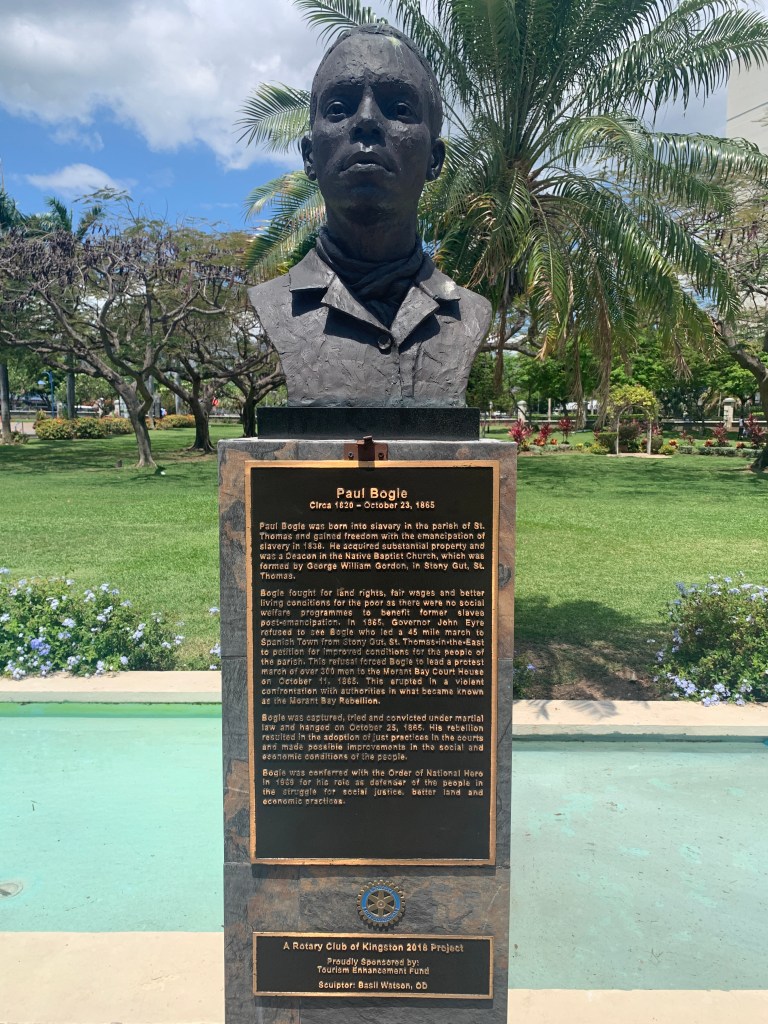
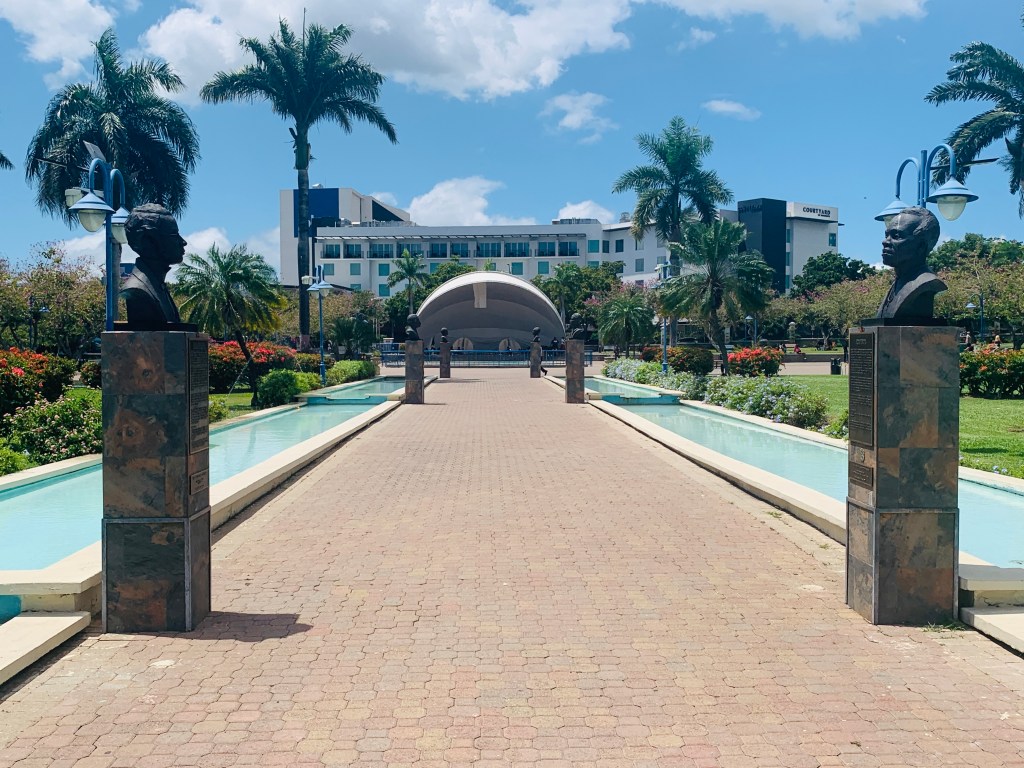
Spending time in Kingston, Jamaica offered a glimpse into the island’s cultural roots, resilience, and rhythm. My visit began at Emancipation Park, a beautifully maintained public space that honors Jamaica’s history and ongoing spirit of freedom. At its entrance stands the striking statue “Redemption Song,” depicting a man and woman gazing upward, symbolizing the strength and dignity of the Jamaican people. The park opened in 2002 to commemorate the end of slavery, serving as a peaceful yet powerful reminder of the nation’s struggle for liberation.
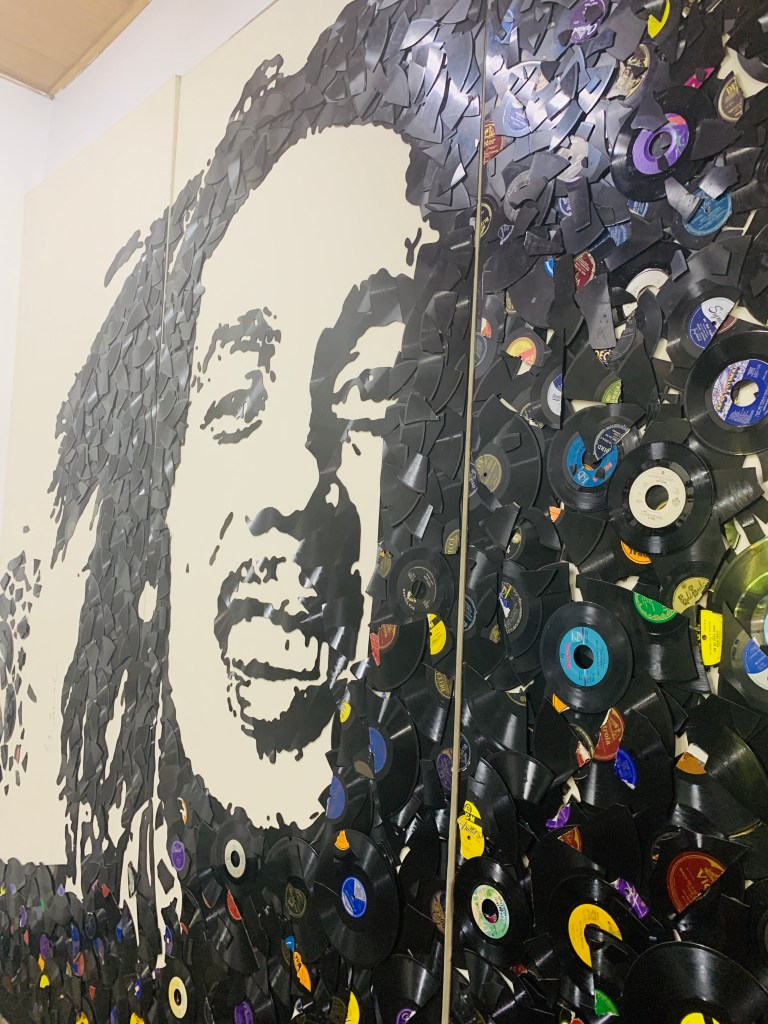
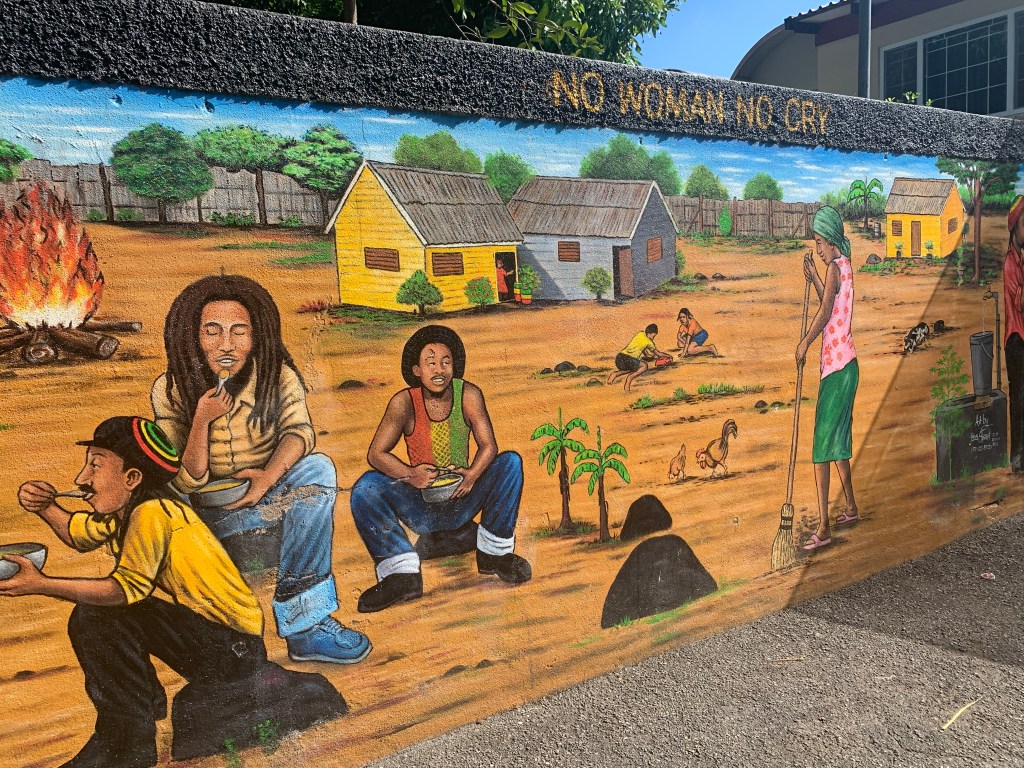
From there, I made my way to the Bob Marley Museum, located in the legendary musician’s former home at 56 Hope Road. The tour was led by Wilfred “Ricky Chaplin” Chambers, whose passion and personal connection to the music world added warmth and authenticity to the experience. Room by room, we explored Marley’s life and legacy—from handwritten lyrics to rare photos of family and concerts. The gallery walls were creatively decorated with real vinyl records, a nod to the analog age that helped launch reggae across the globe.
One highlight was seeing Bob Marley’s 1977 Land Rover Series III, still bearing the character of a well-lived life. The vehicle is displayed—recently restored—symbolizing Marley’s rugged path and unwavering spirit.
The museum also sheds light on the 1976 assassination attempt that Marley survived, a pivotal moment in his life that only deepened his commitment to peace and unity. His music, message, and memory remain ever-present in Kingston, and walking through the same halls where he lived and recorded felt both moving and unforgettable.




 yimga.blog
Leave a comment