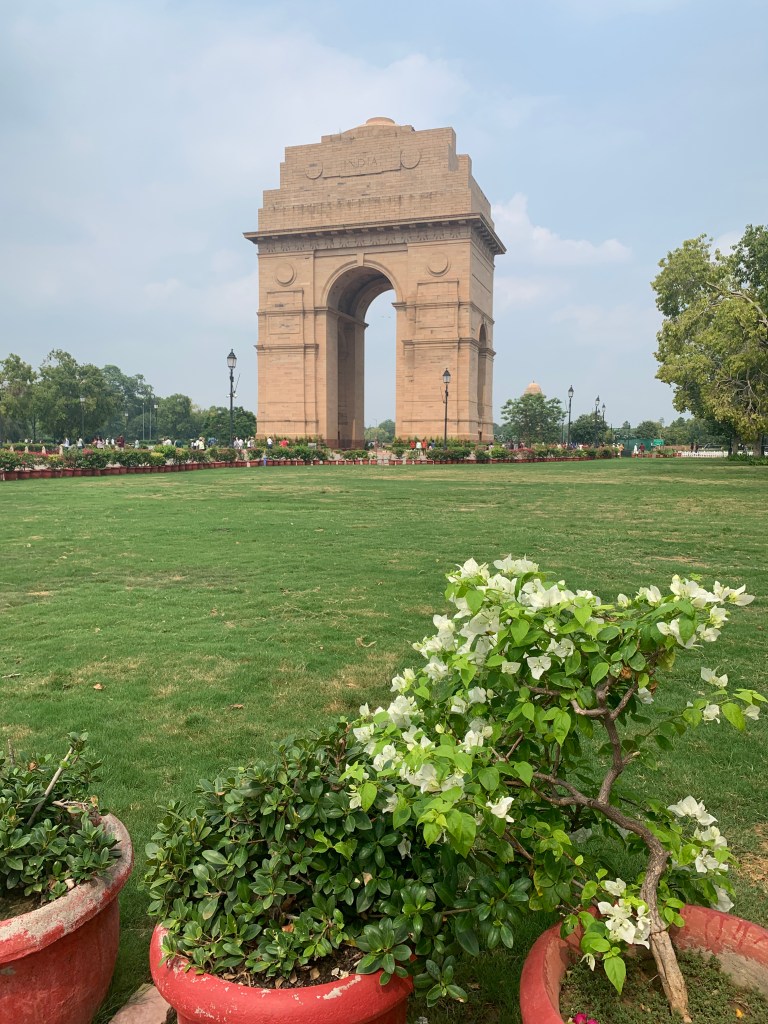
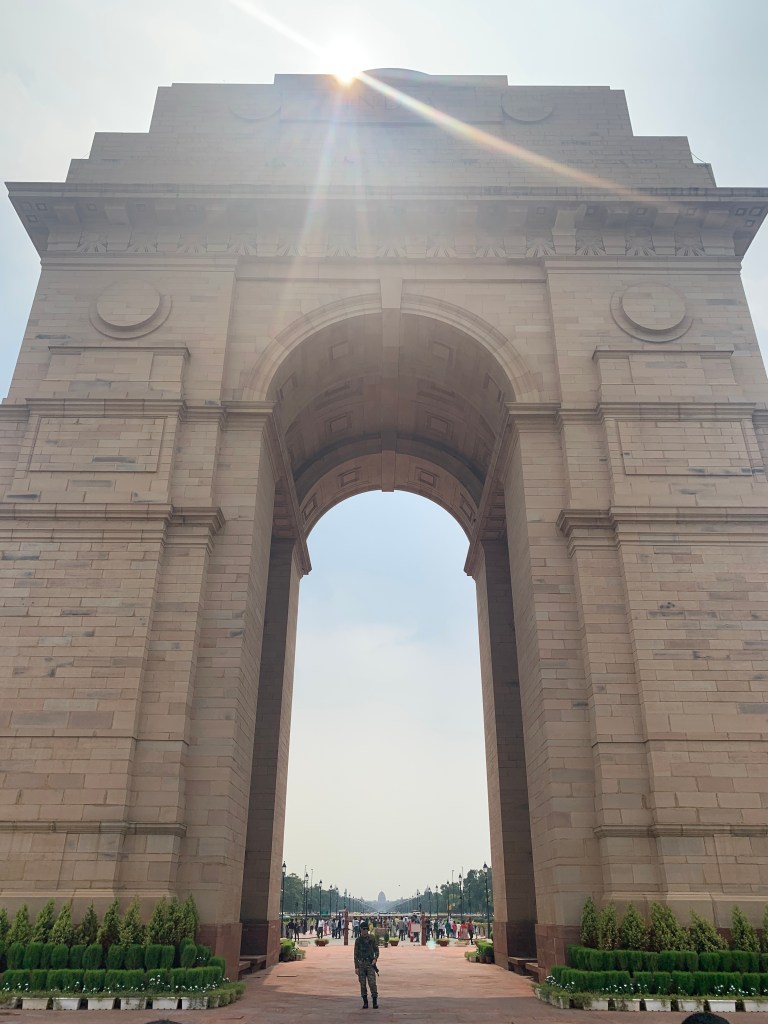
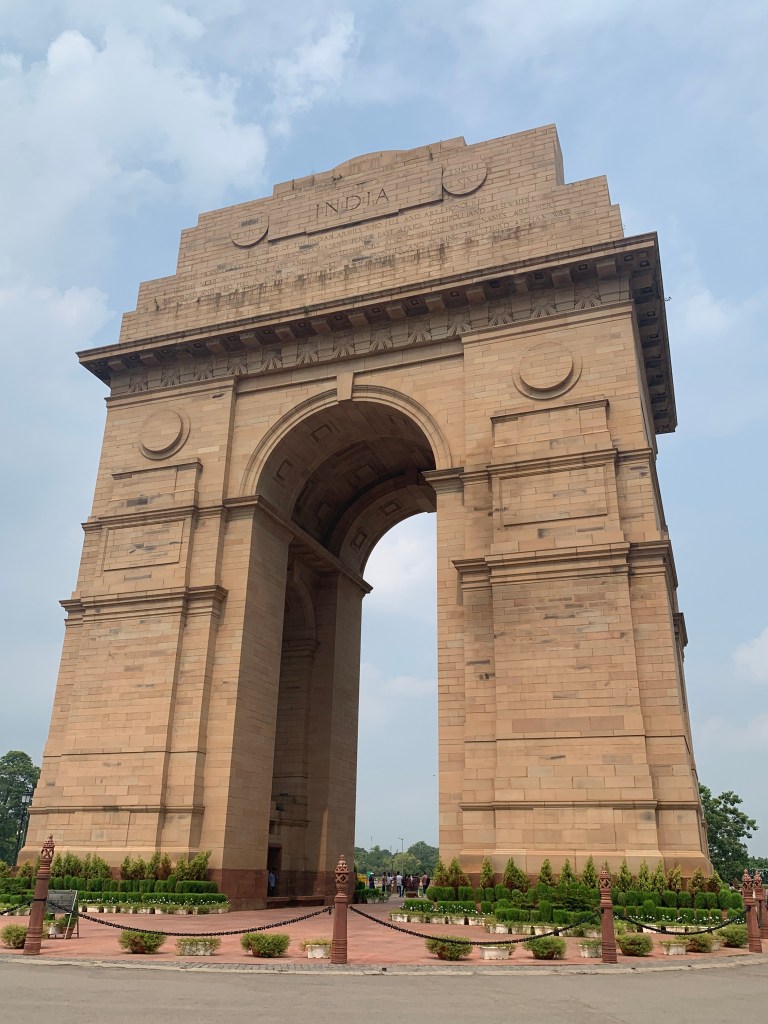
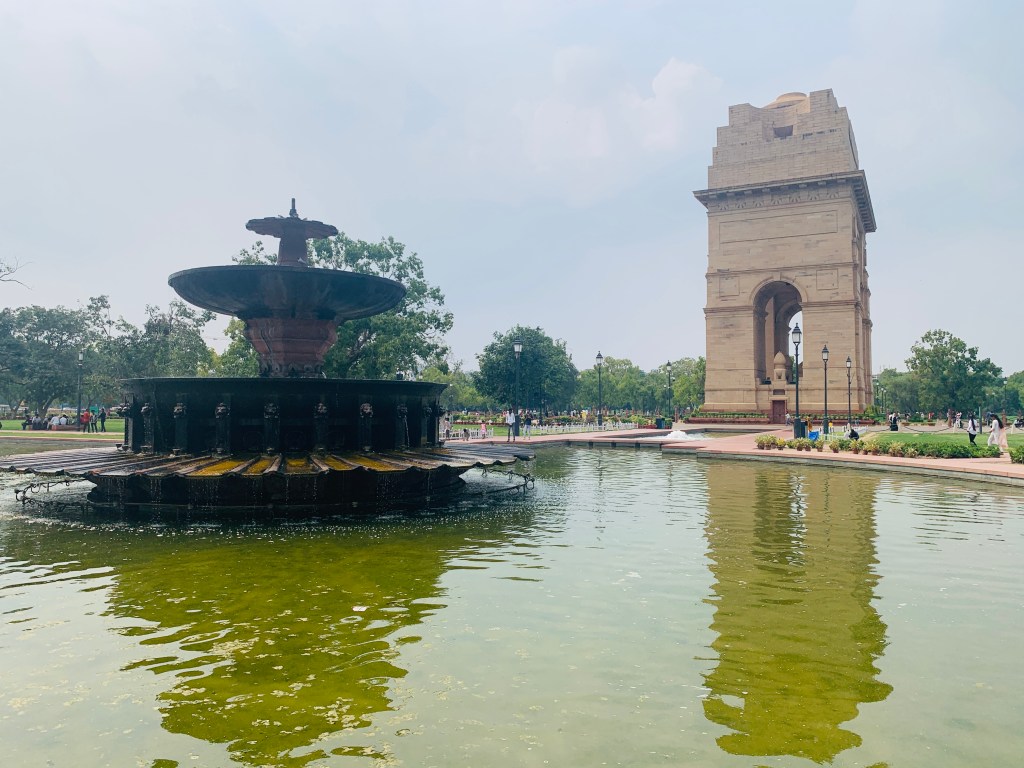
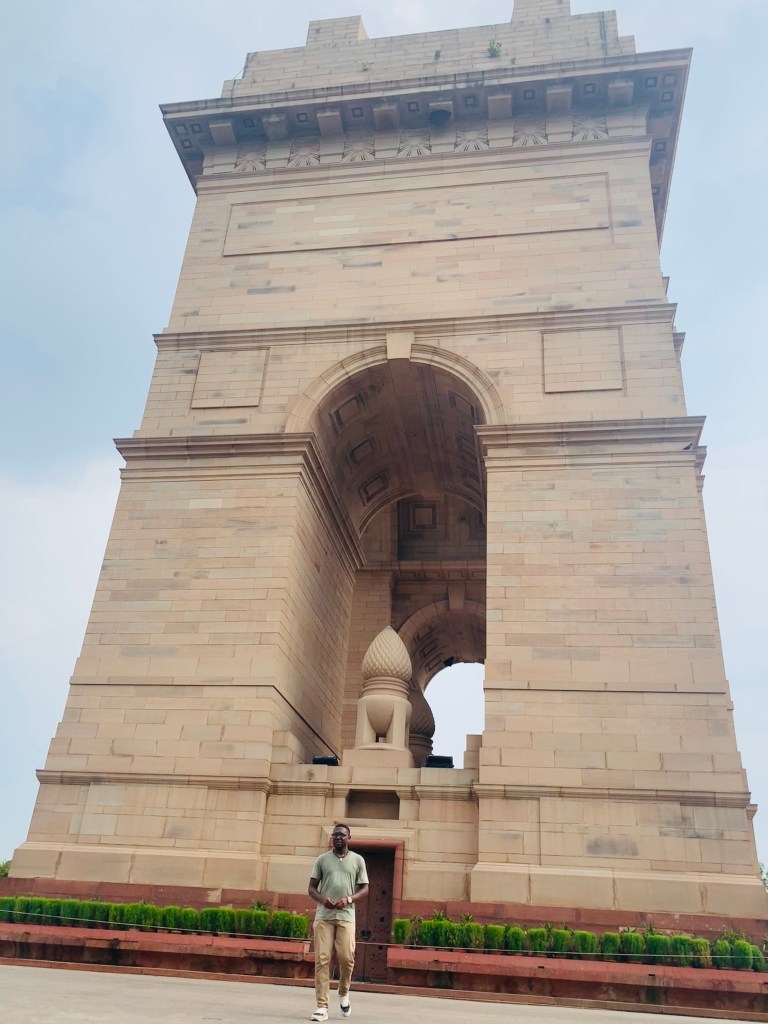
New Delhi offered a blend of grandeur, spirituality, and historical depth that unfolded across each place I visited. I began the day at India Gate, a towering war memorial dedicated to over 70,000 Indian soldiers who died in World War I. Surrounded by wide lawns and quiet solemnity, it stood as a powerful reminder of India’s sacrifices during colonial times.
From there, I walked the ceremonial boulevard to Rashtrapati Bhavan, the official residence of the President of India. Originally built as the Viceroy’s House under British rule, this palatial structure now symbolizes the transition from empire to independence. Its domes and columns echo both Indian and Western architectural styles, a physical blend of past and present.
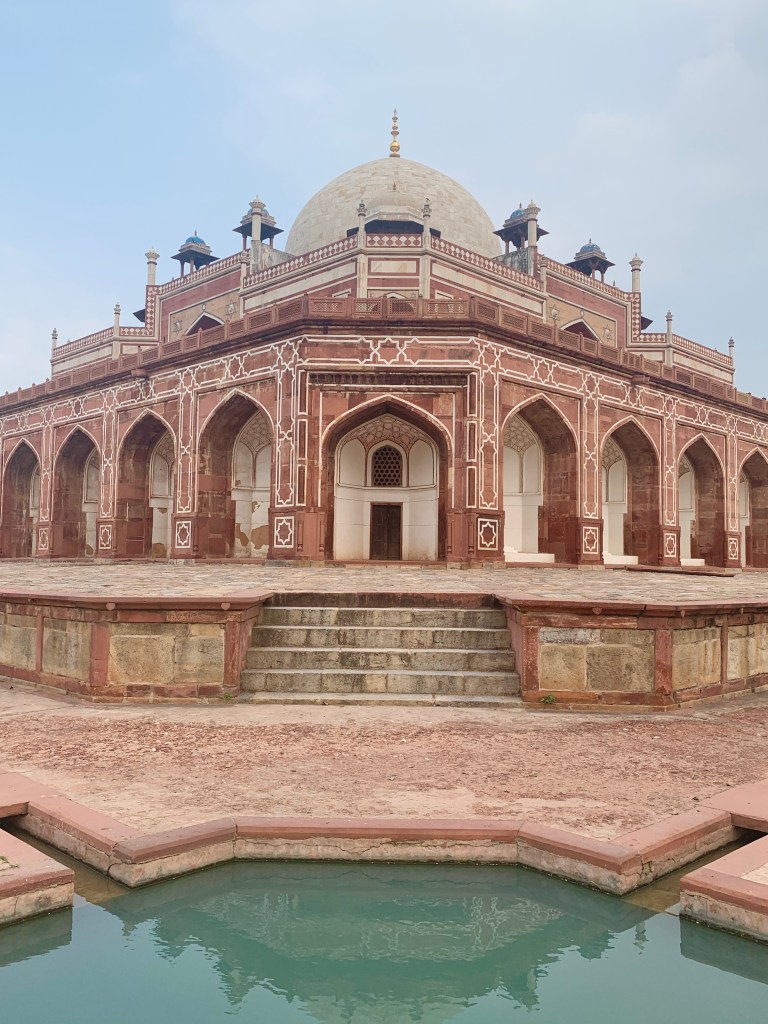
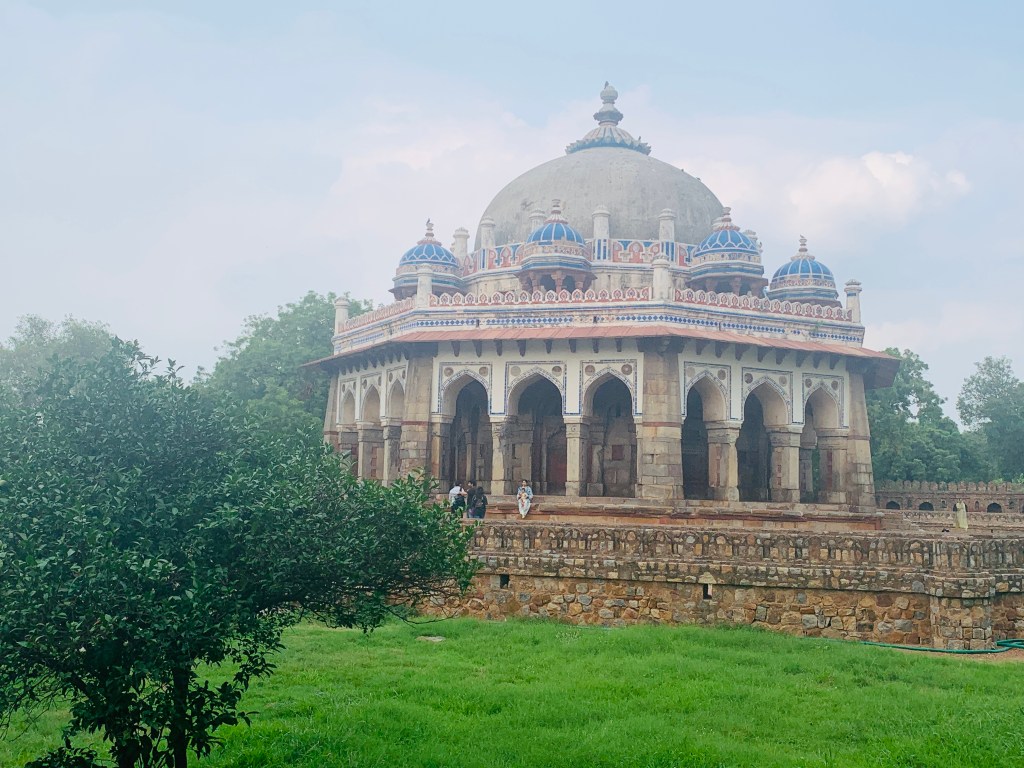
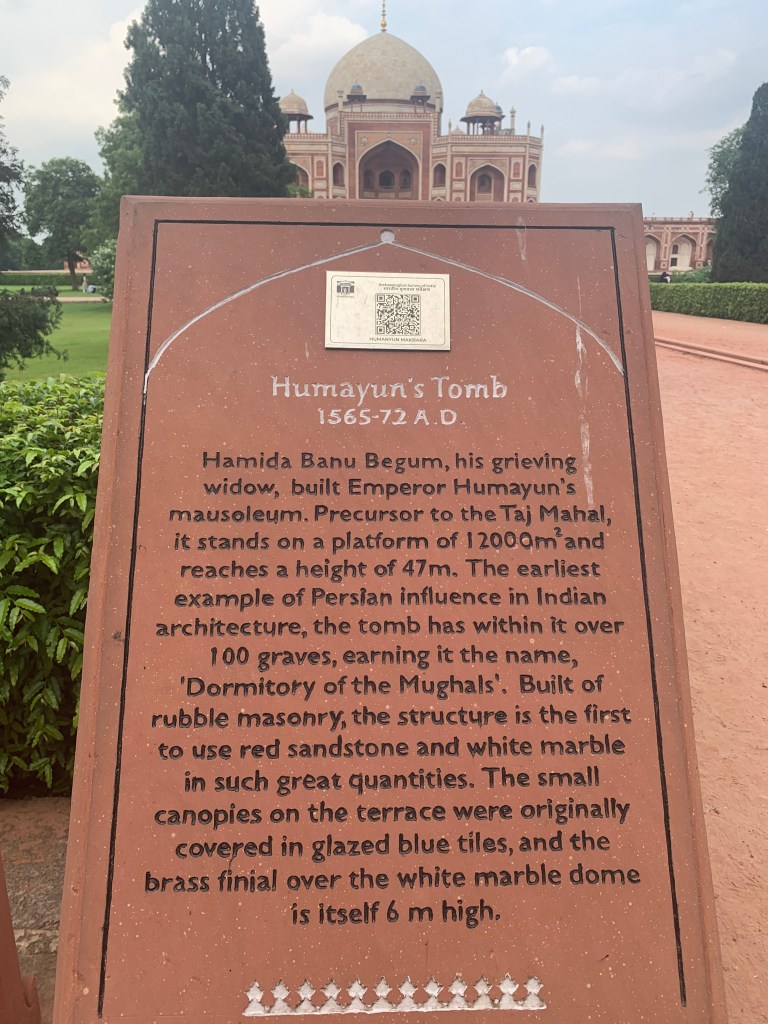
Next was Humayun’s Tomb, a stunning example of Mughal architecture and the inspiration for the later Taj Mahal. Built in the 16th century by Humayun’s widow, the red sandstone structure is surrounded by symmetrical gardens and offers a peaceful break from the city’s movement. The tomb marks an important chapter in India’s architectural evolution, as it was the first garden tomb of its kind in the subcontinent.
Later in the day, I visited Swaminarayan Akshardham, a modern temple complex known for its elaborate carvings and serene atmosphere. Though completed in 2005, it draws from centuries of Hindu artistic and spiritual tradition. Nearby, the Shri Laxmi Narayan Temple (also known as Birla Mandir) stood quietly amid city traffic with its white marble facade drawing locals and visitors alike into prayer and stillness.








 yimga.blog
Leave a comment