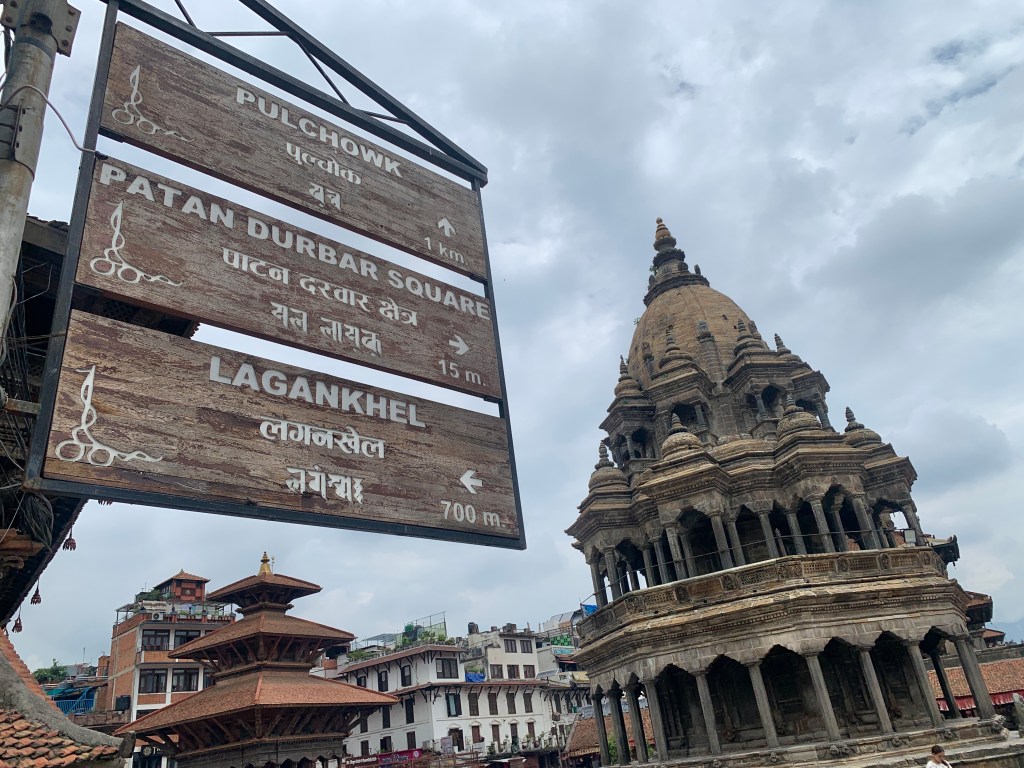
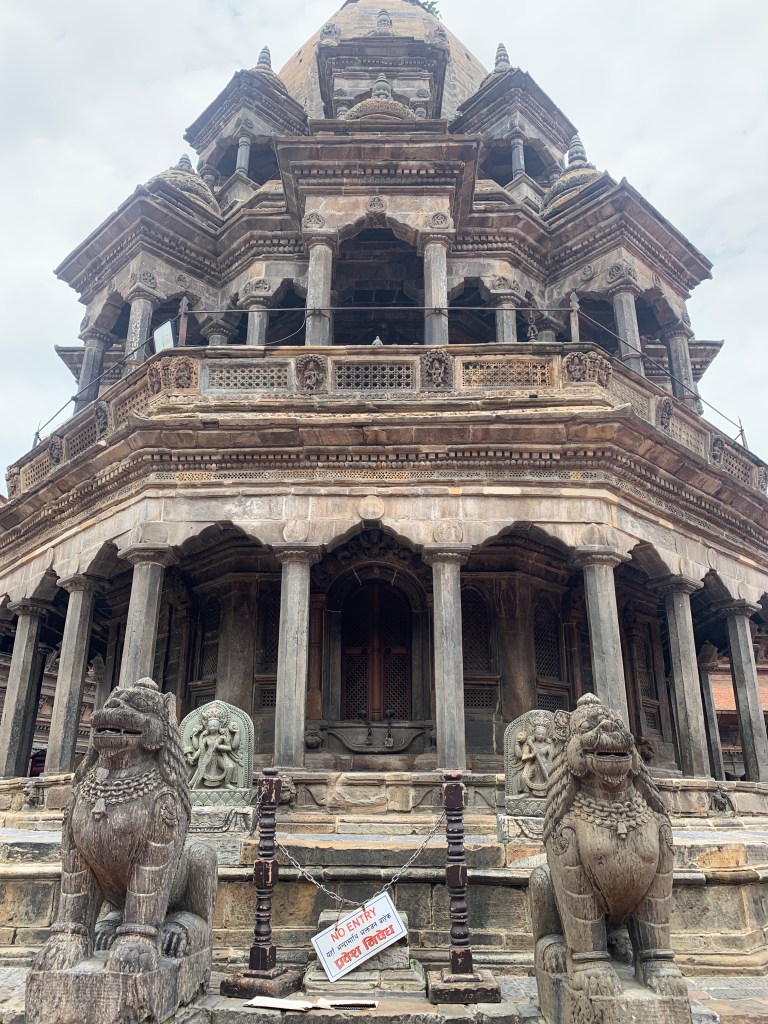
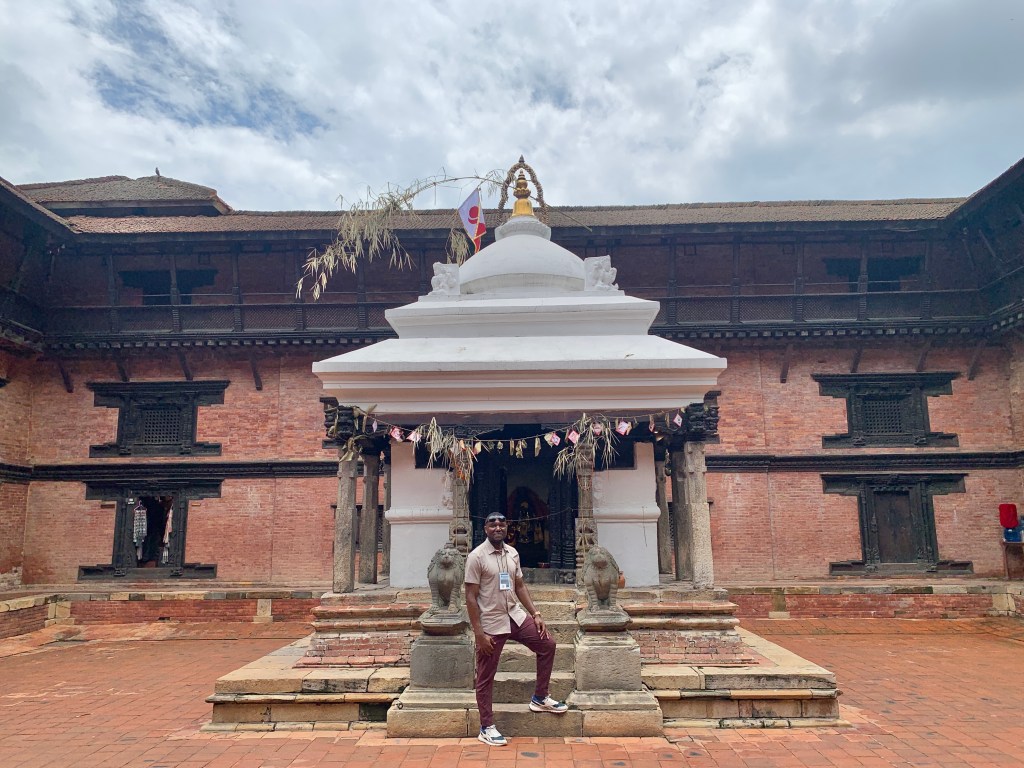
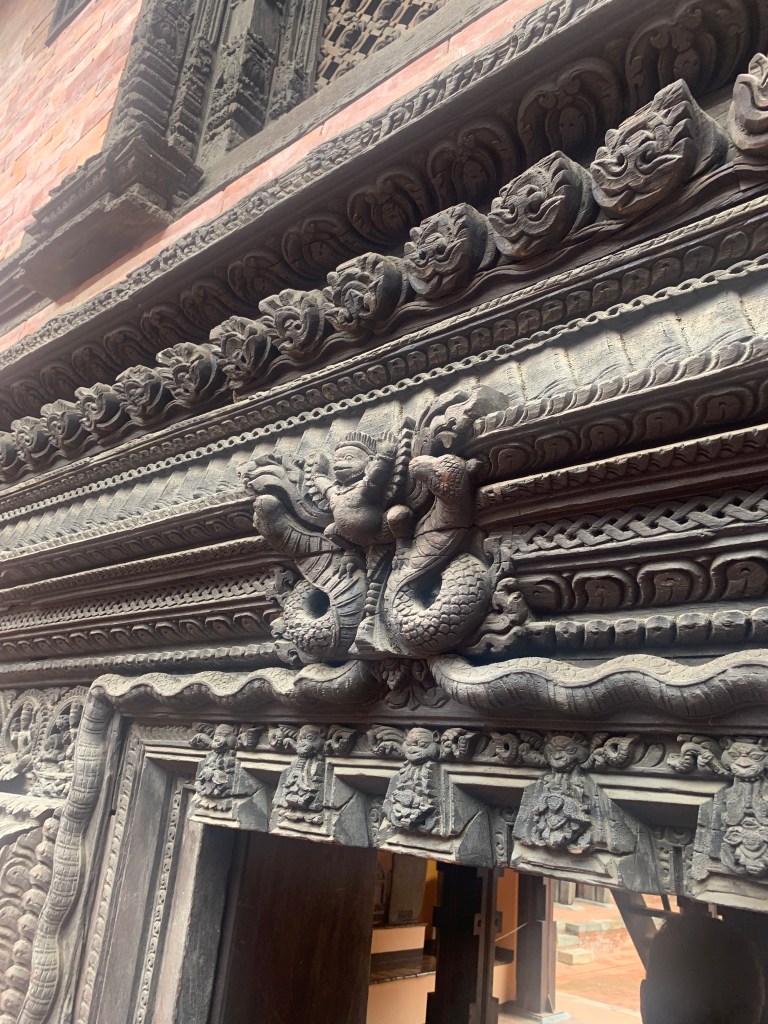
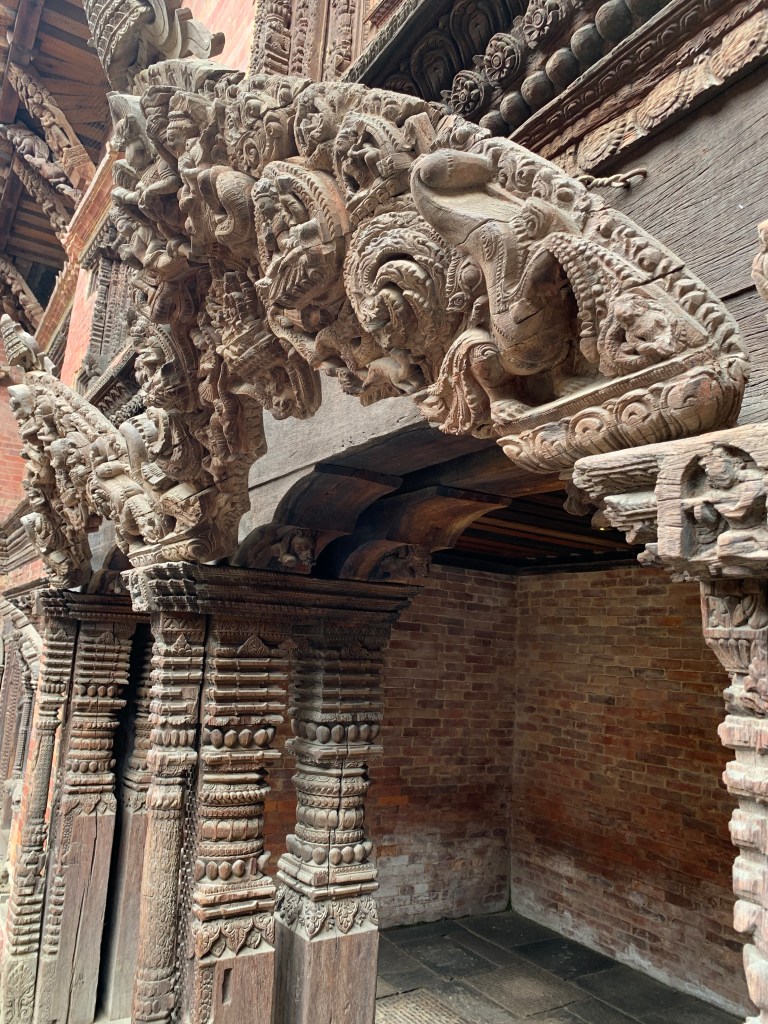
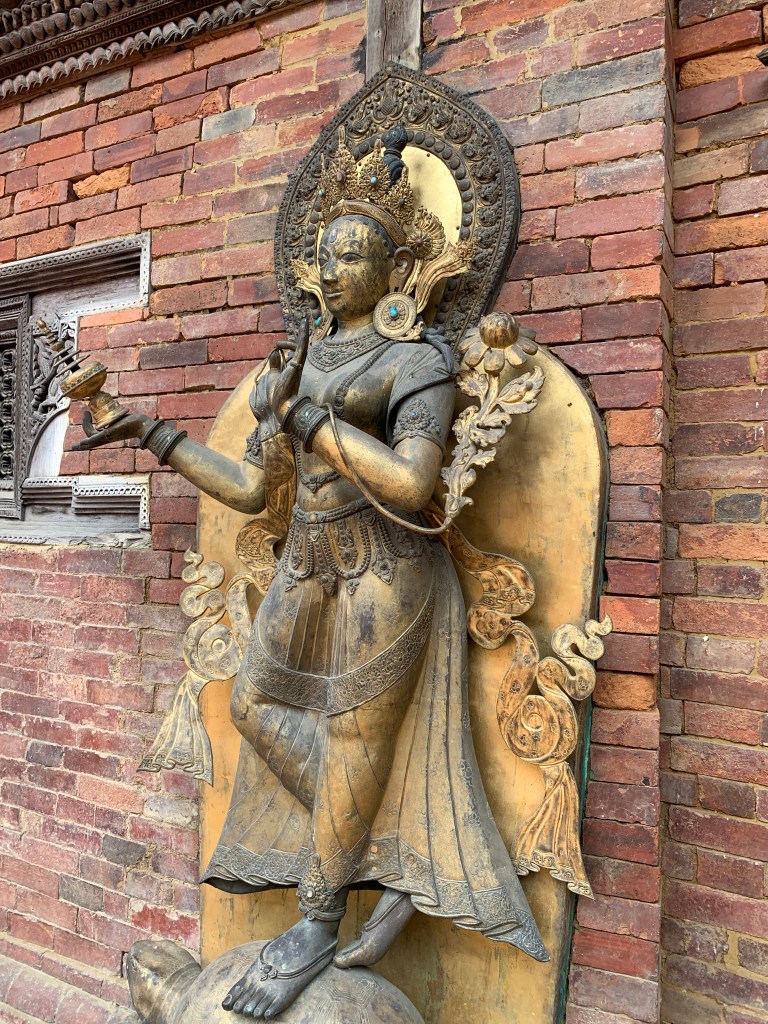
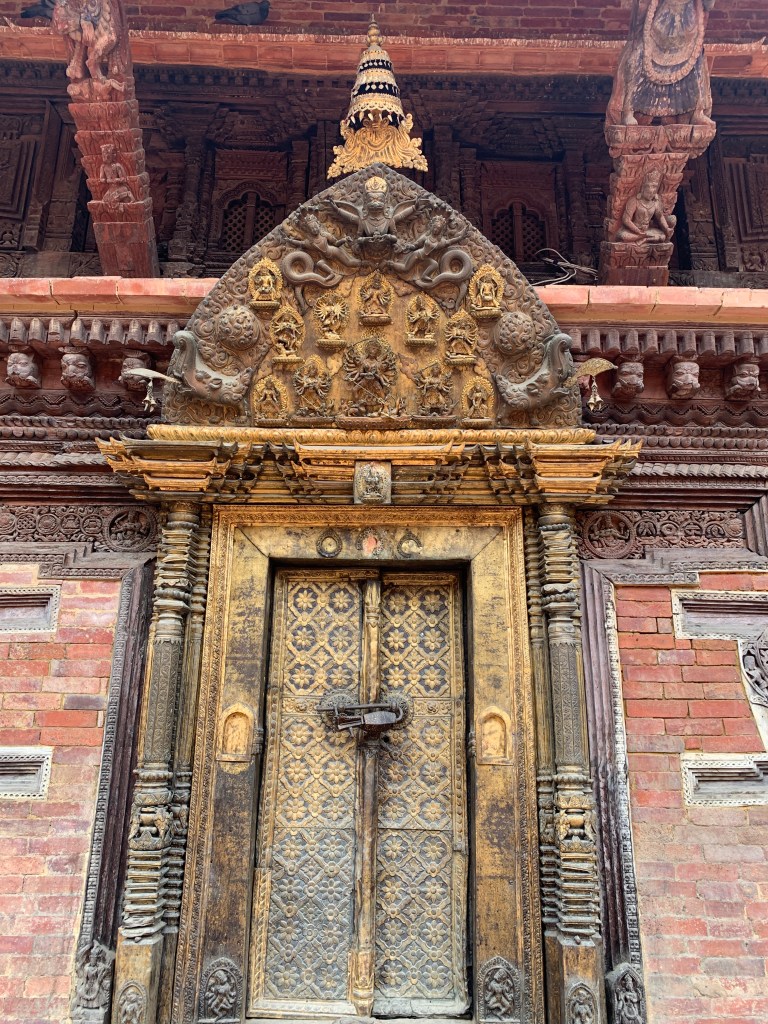
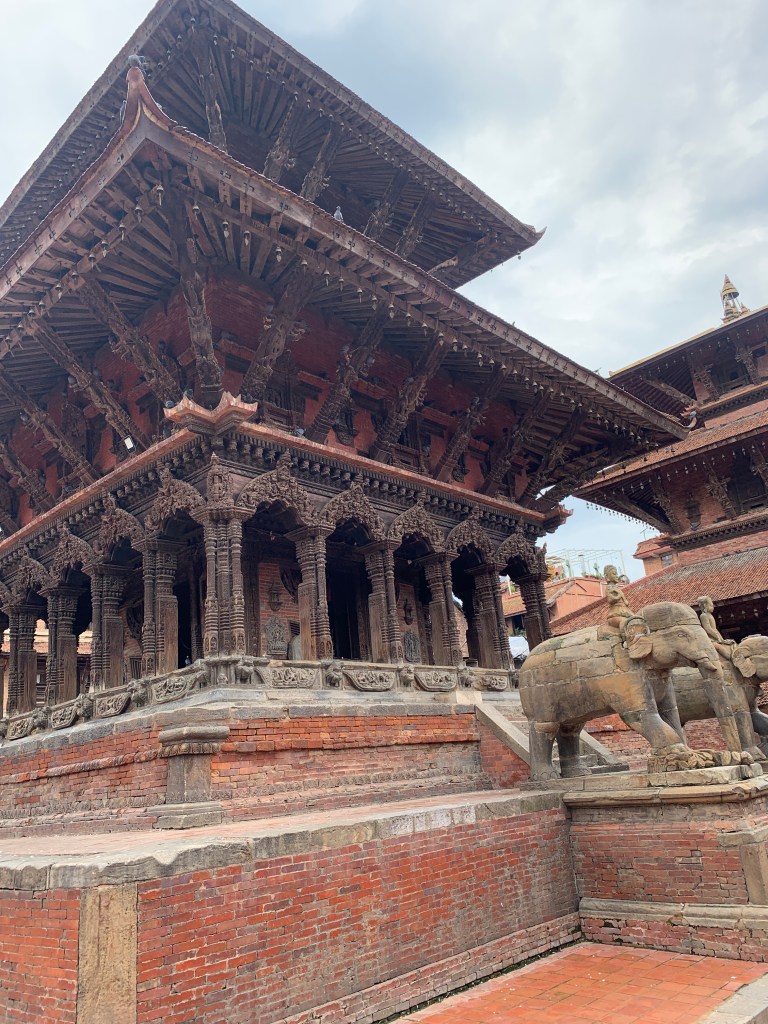
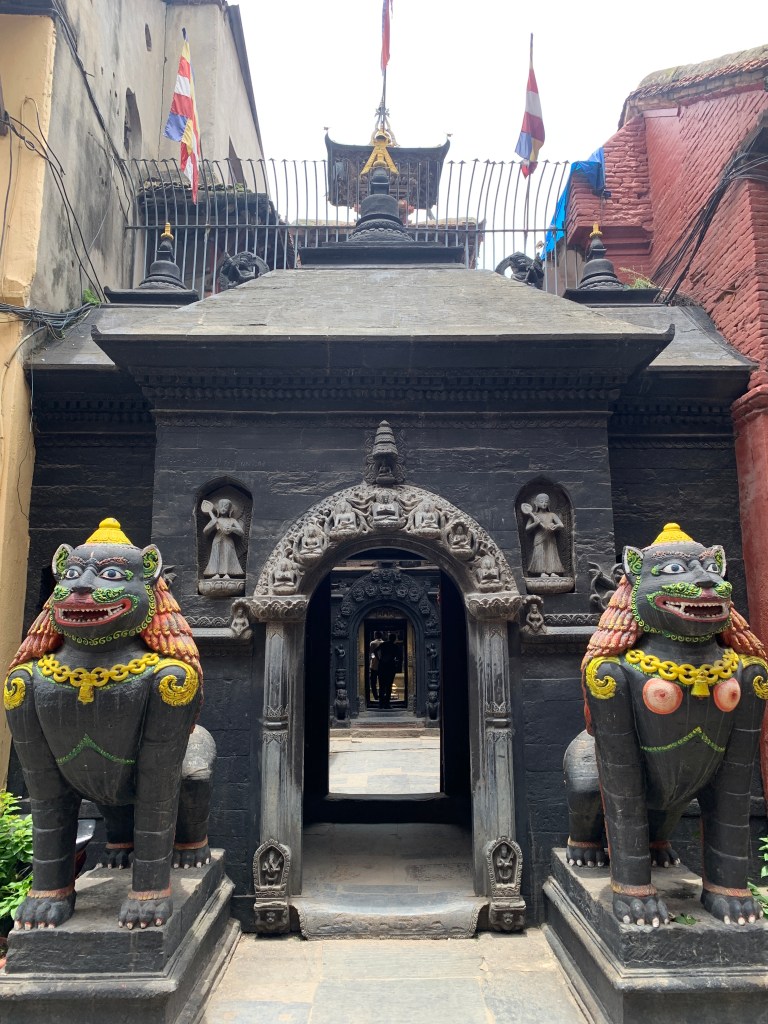
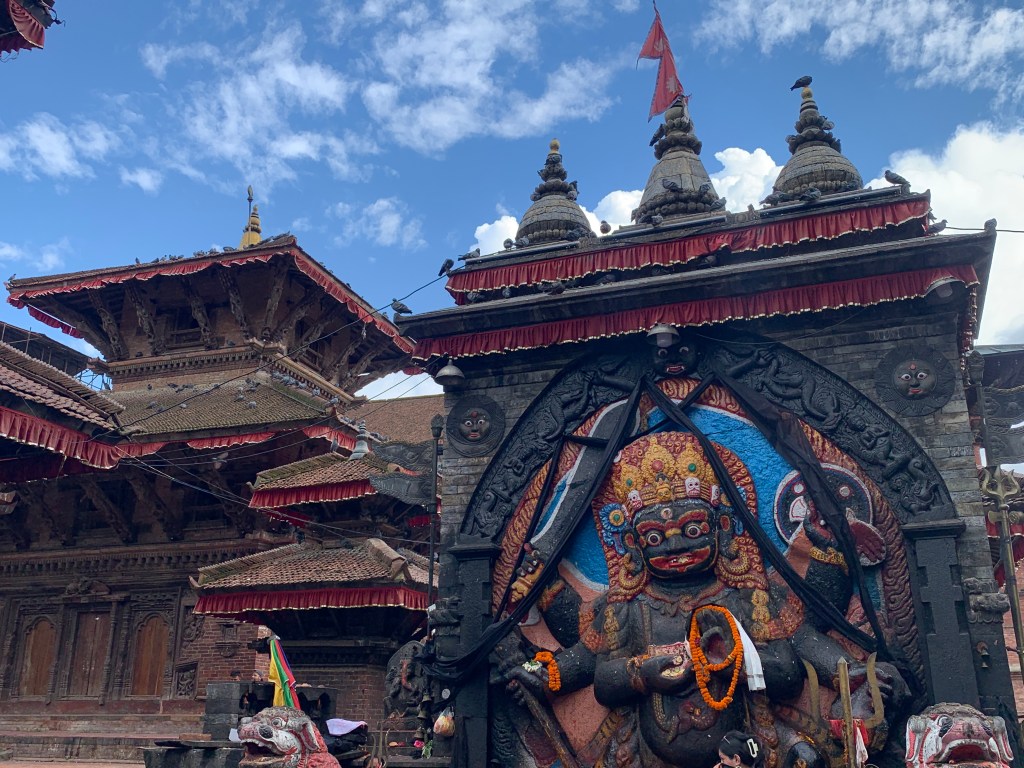
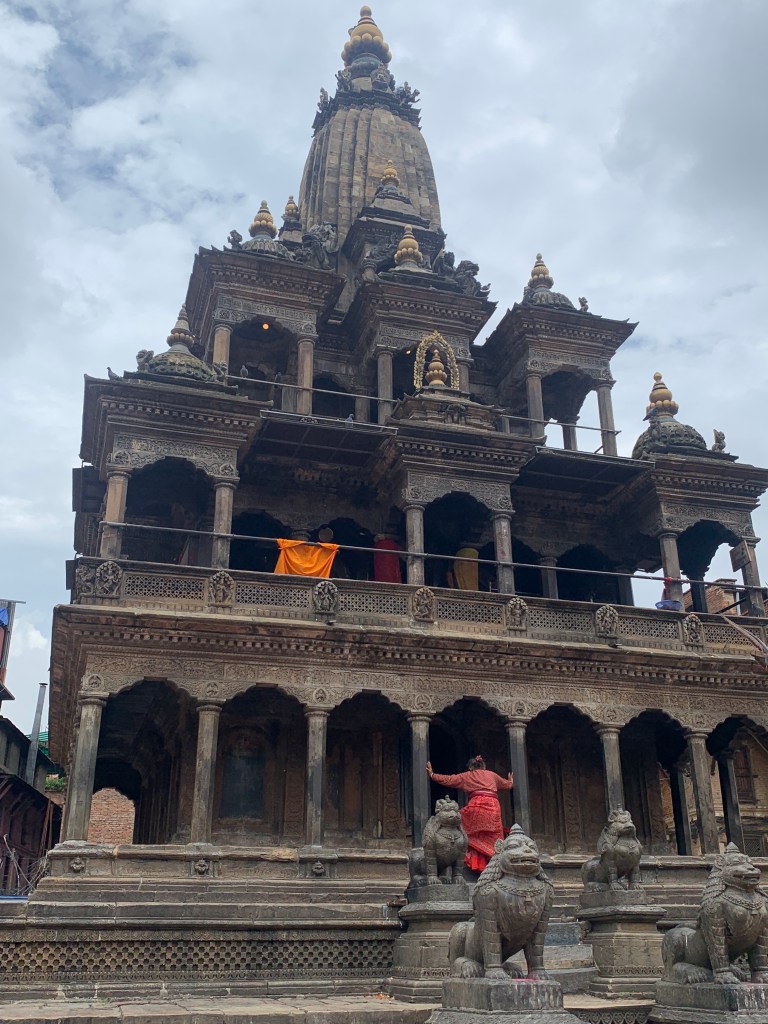
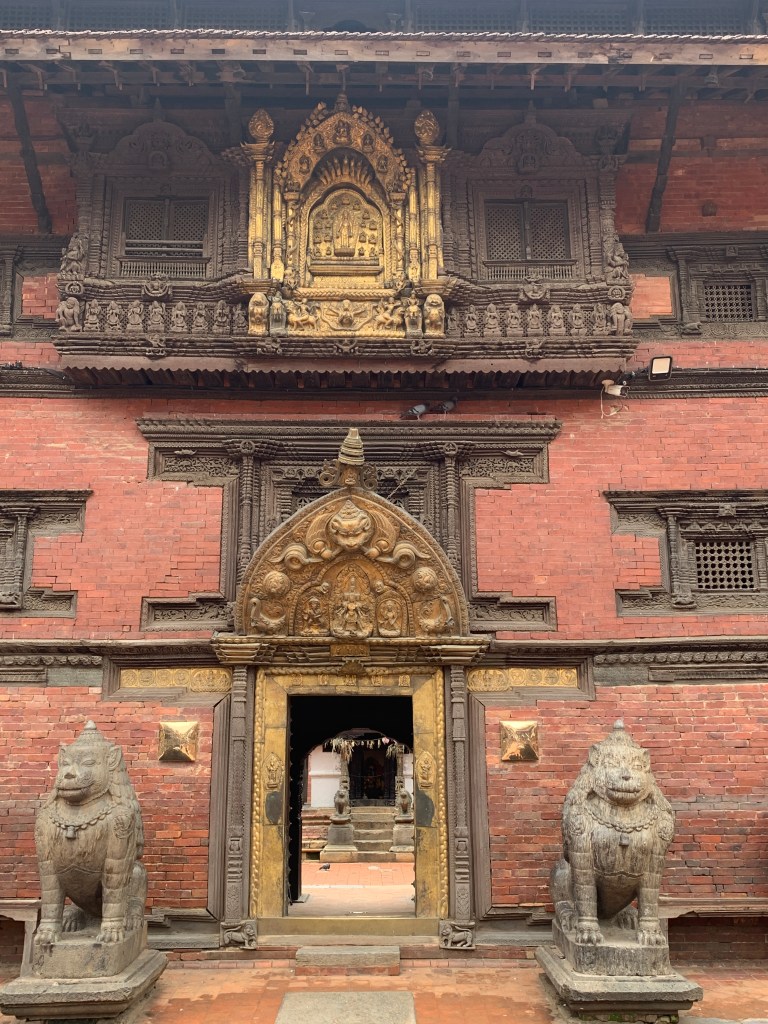
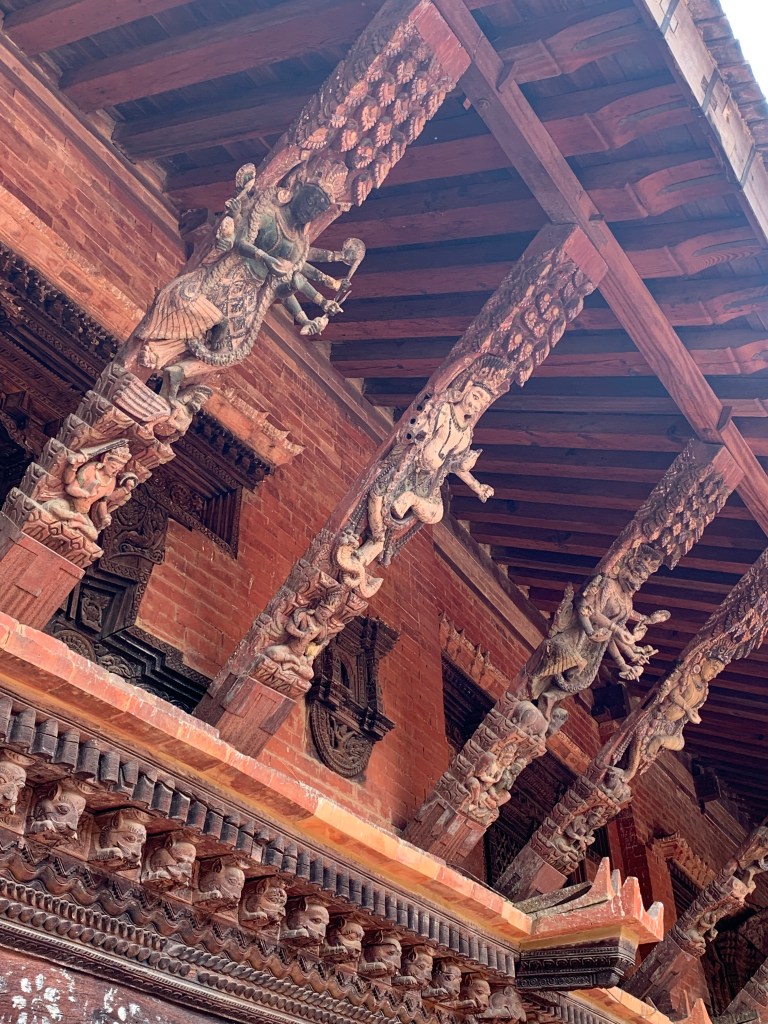
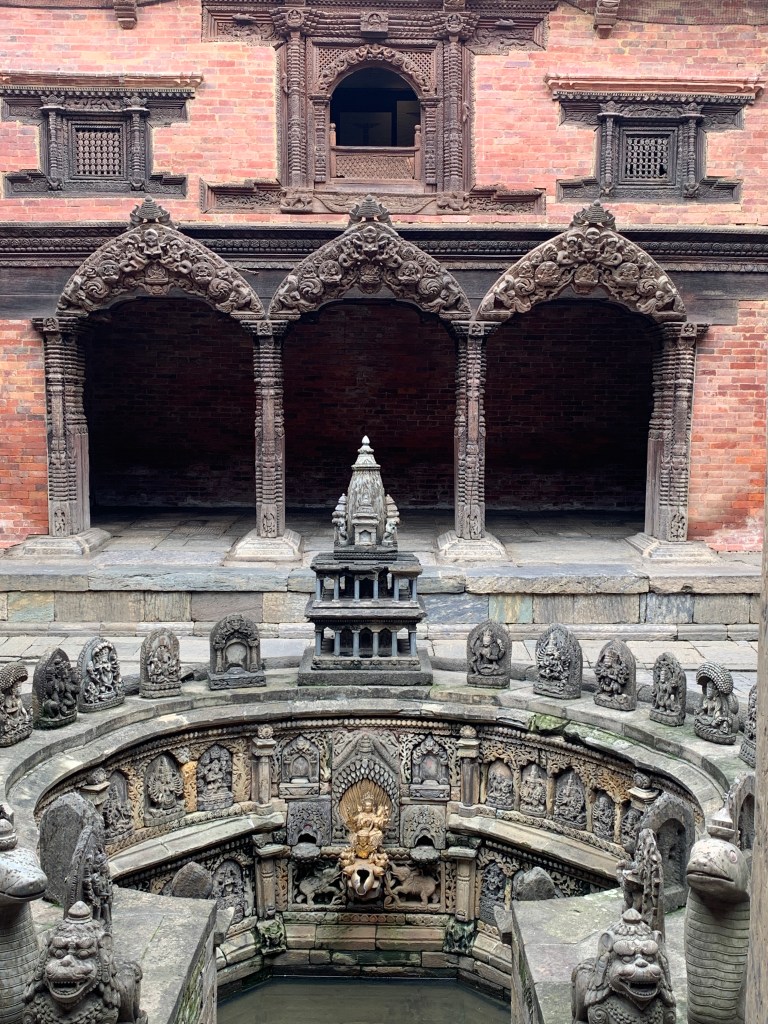
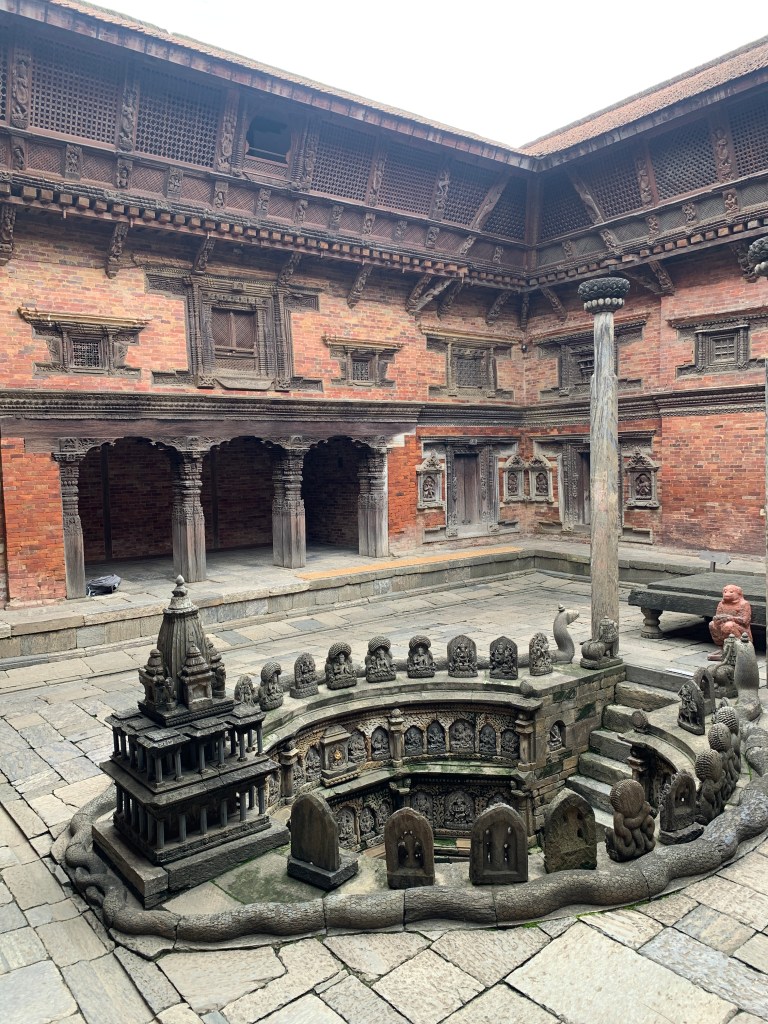
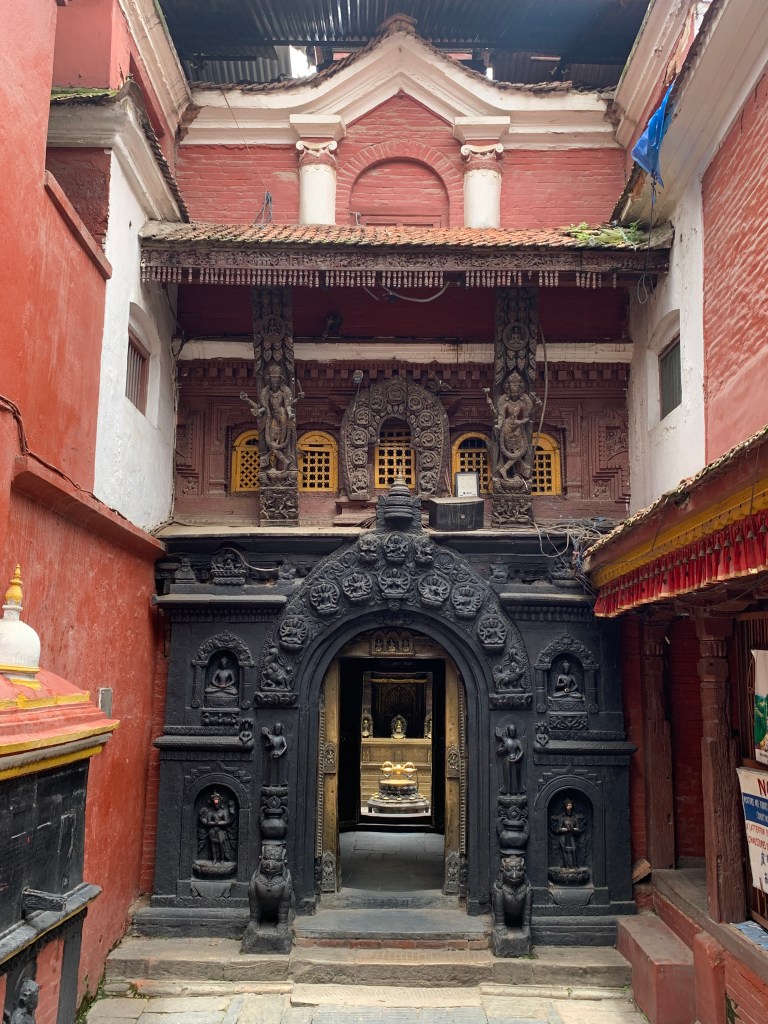
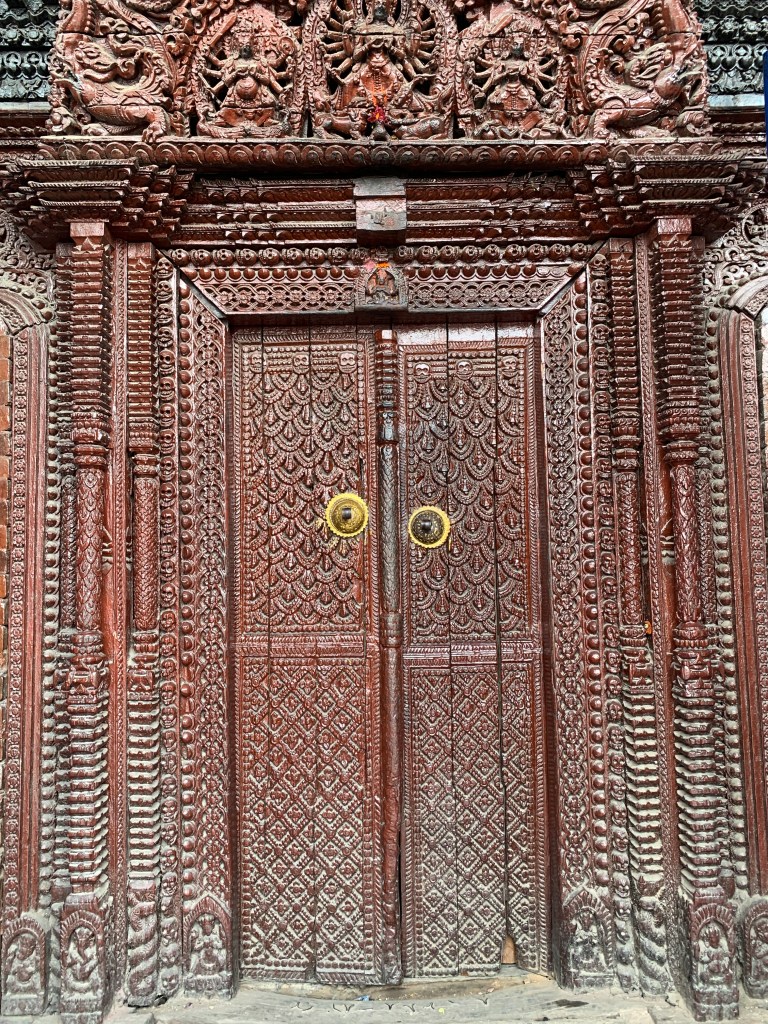
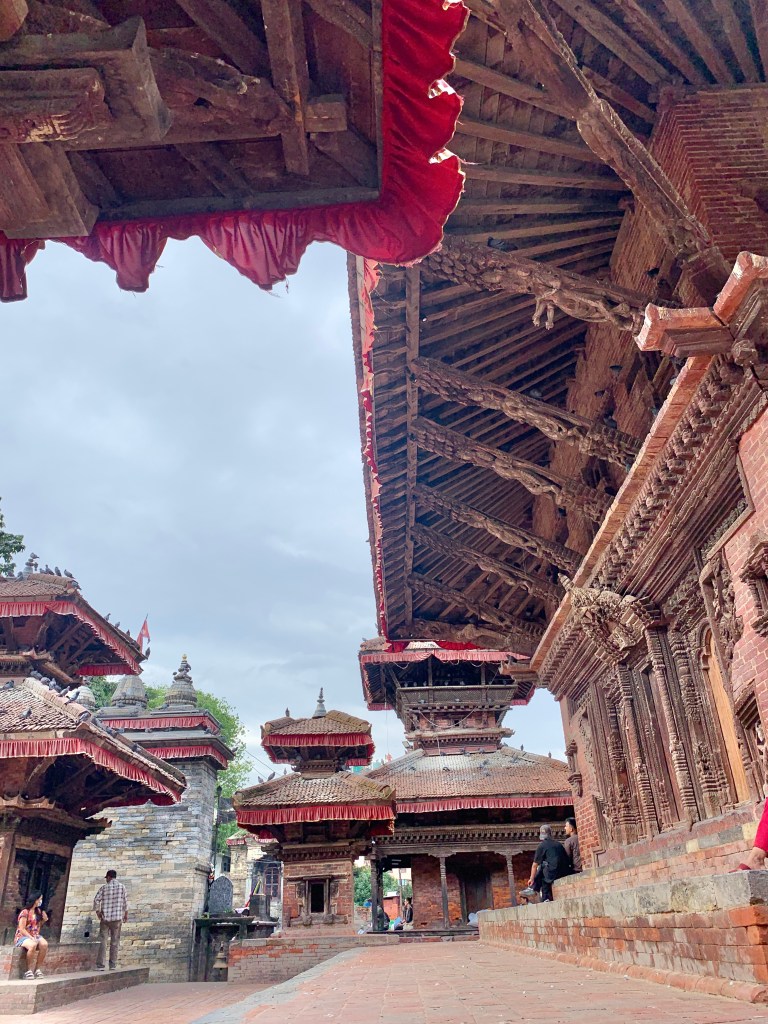
Morning light settles gently over Kathmandu, where centuries of history remain woven into everyday life. The city’s temples, courtyards, and shrines create a sense that the past is never far away. Walking through Patan Durbar Square revealed remarkable craftsmanship in carved wooden windows, brick courtyards, and palaces that once housed the Malla kings. For centuries, Patan stood as an independent kingdom before the unification of Nepal in the eighteenth century, making this square one of the country’s most significant centers of art and royal history.
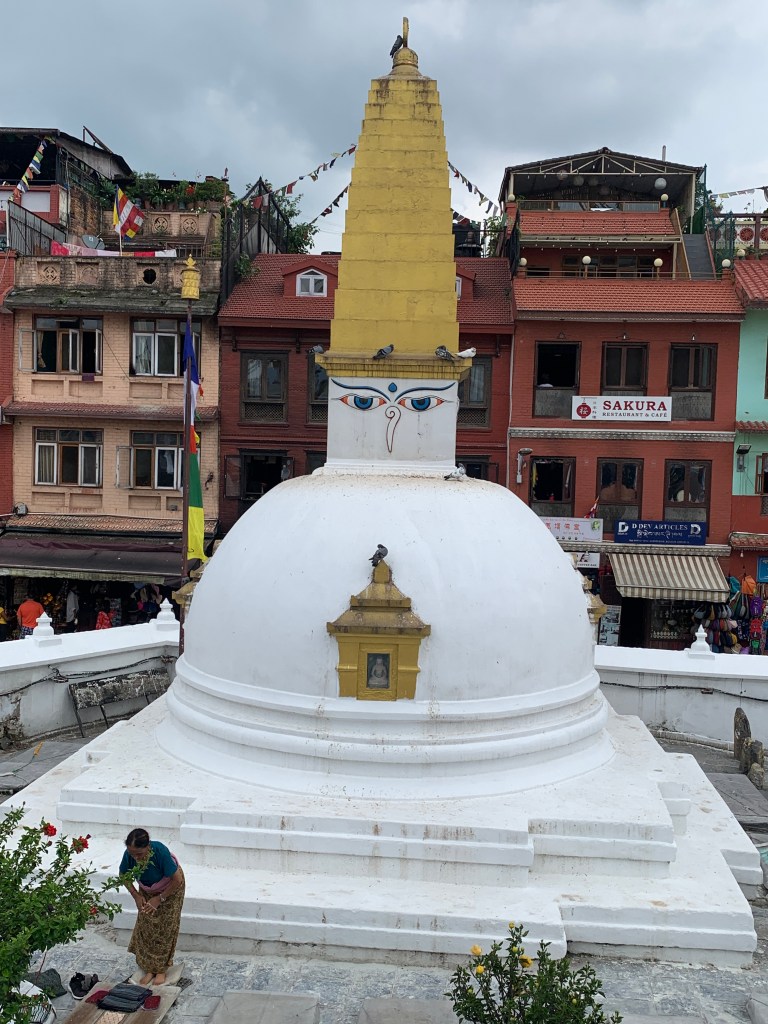
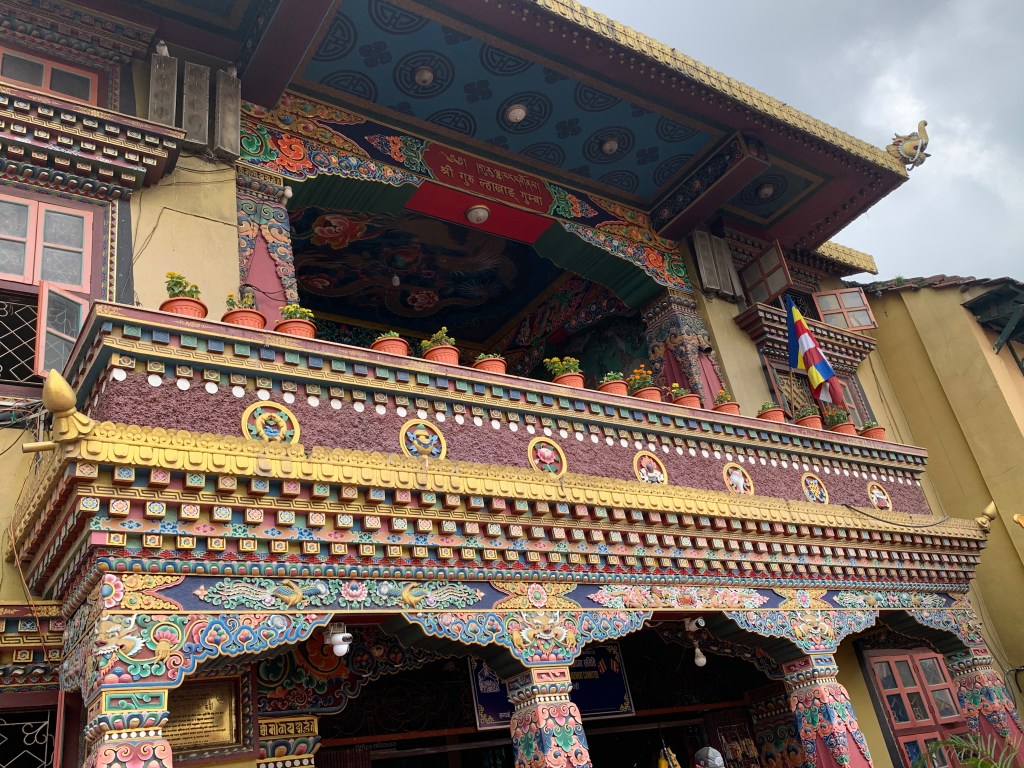
At the great Boudhanath, prayer flags stretched across the sky while pilgrims circled the massive white dome, quietly turning prayer wheels. Believed to date to the fifth century, Boudhanath is one of the world’s largest Buddhist stupas and has long served as an important destination for traders and monks traveling between Tibet and the Kathmandu Valley.
The visit continued to Kasthamandap, the historic wooden pavilion from which Kathmandu is believed to derive its name. According to tradition, the structure was built from the timber of a single tree. Although destroyed during the devastating 2015 earthquake, Kasthamandap has been carefully reconstructed, reflecting Nepal’s determination to preserve its cultural heritage after one of the country’s darkest natural disasters.
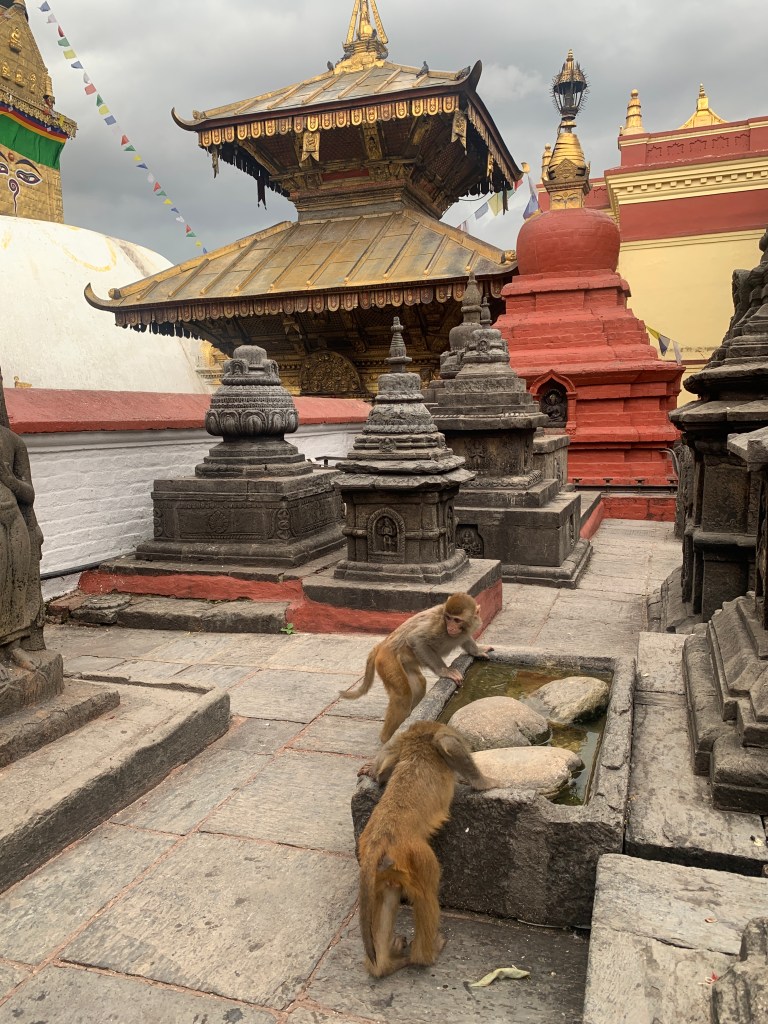
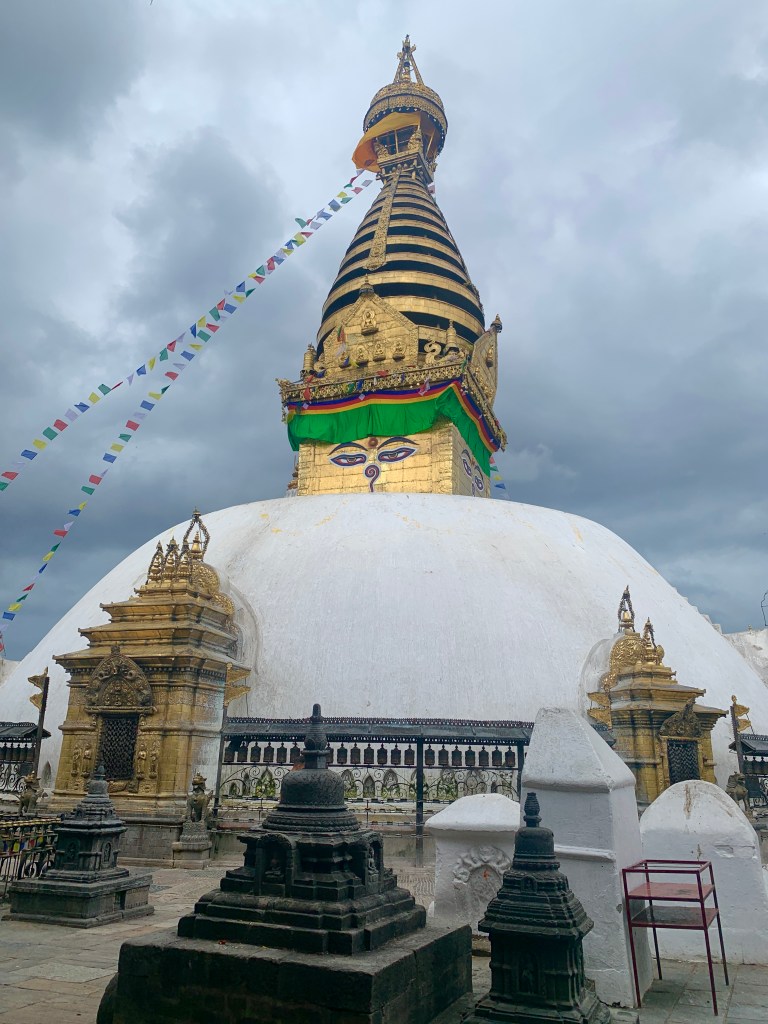
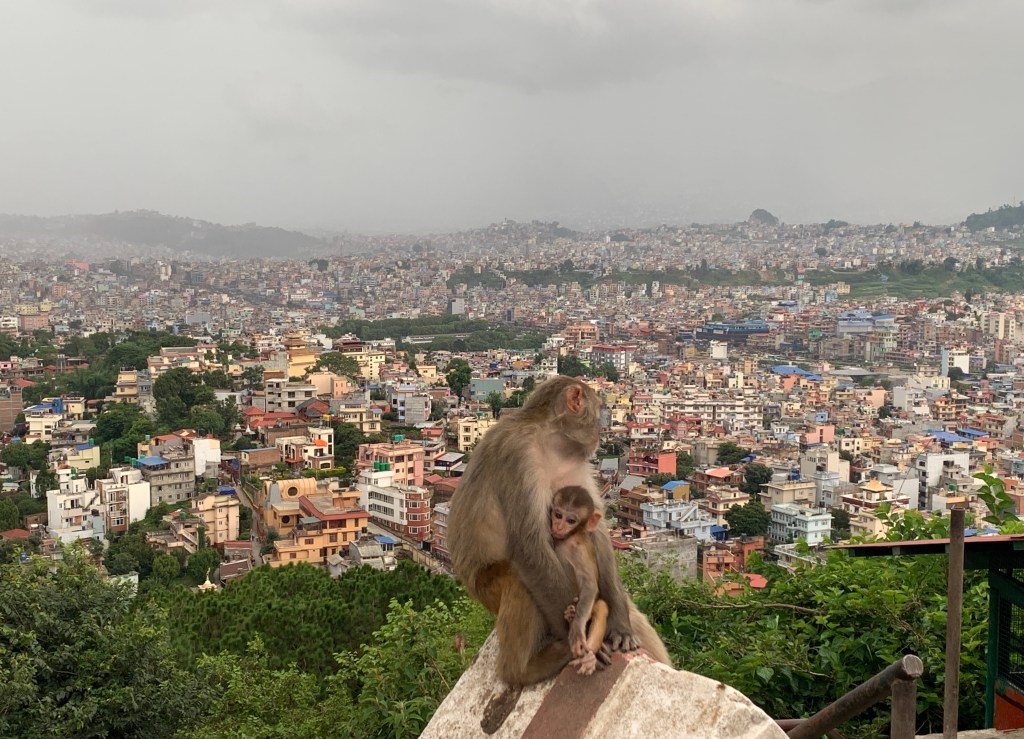
The climb to Swayambhunath rewarded every step with sweeping views across the Kathmandu Valley. Often called the Monkey Temple, the site combines Buddhist and Hindu traditions in one sacred setting. Ancient legend tells of a lotus that emerged from a primordial lake, with Swayambhunath rising where the flower once bloomed after the valley was drained.


Leave a Reply